How to play 13-card rummy, step by step — with melds, drop math and the moment of declaration.
A clean walkthrough of a 13-card rummy hand. Written for first-time players and as a refresher for anyone returning after a break. No system, no hype — just the rules and the language.
18+ · Skill-game content · Please play responsibly and verify the rules in your jurisdiction.
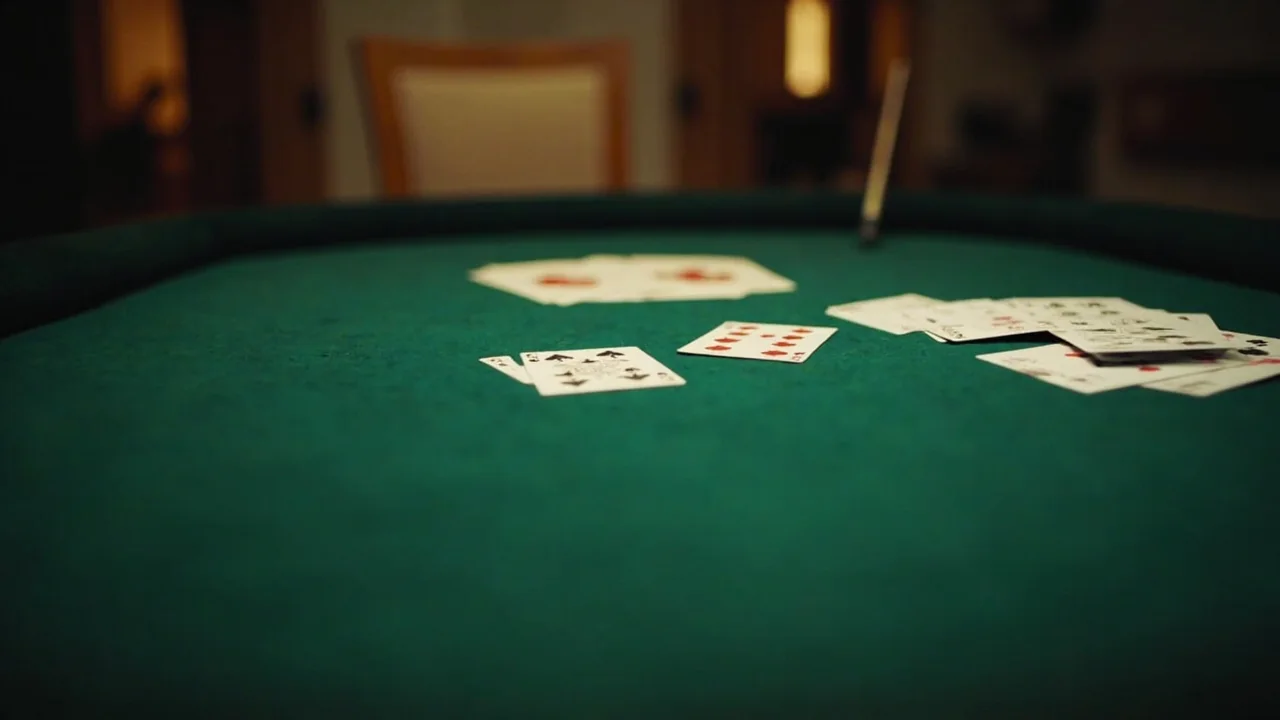
From deal to declaration, step by step
A complete walkthrough of a single 13-card rummy hand. Every format you encounter — points, pool, deals — is a small variation on this skeleton.
The hand, in eight steps
1. Deal. Each player gets 13 cards. The deck's 14th card is placed face-up — that suit-rank's wild joker is fixed for the deal.
2. The first discard. The face-up card also starts the discard pile.
3. Your turn. Draw one card (from stock or discard pile) and discard one card face-up. Always discard to keep the pile moving.
4. Build melds. Aim for at least one pure sequence and one more sequence (pure or impure) before you declare.
5. Read the open pile. Track the last six discards from each opponent. After three or four turns, name one meld they're building.
6. Decide on drops. If your second draw leaves no working sequence, drop early (20 points) instead of bleeding through to 80.
7. Declare. Lay all 13 cards face-up in valid melds plus one closed card. The closed card must be discarded to the open pile to finish.
8. Score. The loser tallies ungrouped cards: face cards 10, number cards face value, aces 10, jokers 0.
Now read the strategy field notes

The three melds, in plain language
Every 13-card rummy hand is a combination of these three building blocks. Learn to read them at a glance.
Three or more consecutive cards of the same suit with no joker used. At least one is mandatory for a valid declaration.
A sequence where a joker fills the gap. Counts as the second sequence requirement.
Three or four cards of the same rank across different suits. Useful filler; not a substitute for a sequence.
Lock both sequences before you chase sets. A clean hand with two sequences almost always beats a busy hand with one.
The joker, plainly
Two jokers exist in most skill-game rummy formats. They behave differently, and confusing them is the most common beginner mistake.
| Joker type | What it is | How it scores |
|---|---|---|
| Printed joker | The joker card(s) printed into the deck. | If ungrouped, counts as 0 points. |
| Wild joker | The card of the same rank and any suit as the face-up card on the discard pile at the start of the deal. | Acts as a substitute for any missing card in a meld. |
The wild joker changes each deal. Always check the face-up card before you commit to a sequence plan.
Drop math, in three numbers
Points rummy drop costs are visible, repeatable and worth memorising. Other formats use flat or per-deal equivalents.
You drop before picking your third card. Costs 20 points regardless of what you've drawn.
You drop after picking a card but before drawing for the third time. Costs 25 points.
You declare, lose, and your ungrouped cards are tallied. Often higher than 30.
If your second draw leaves no working sequence, the early drop at 20 is almost always the correct move.
The moment of declaration
A valid declaration requires every card grouped in a meld except the one you toss as the finishing discard. Get this wrong and the hand scores as a loss, not a win.
- One pure sequence — non-negotiable. Without it, no declaration is valid.
- One more sequence — pure or impure. Combined with the first, this is the minimum.
- Remaining cards — grouped in any combination of pure sequences, impure sequences, or sets.
- One finishing card — discarded to the open pile to close your turn.
Beginner pitfalls to avoid
The five most common mistakes
Chasing the second sequence before the first. If you don't yet have a pure sequence safe, every other move is built on sand.
Ignoring the wild joker. Always note the face-up card at the start. The joker is the cheapest sequence-filler you have.
Dropping too late. After your third draw, the cost jumps and your hand usually isn't better than it was.
Feeding opponents. If the open pile carries a card they need, picking it from the pile is a gift. Read first, then draw.
Playing without a session cap. The fastest way to lose more than you planned is to skip the limit conversation.
Set session limits
Beginner questions, answered plainly
Can I declare without a pure sequence?
No. A pure sequence (no joker) is mandatory. Without one, no other combination — not even a perfect set — makes the declaration valid.
What if I have two impure sequences but no pure sequence?
That hand scores as a loss. Impure sequences do not substitute for a pure sequence.
Do I have to take the face-up card at the start?
No. You draw from the closed stock or pick from the discard pile on each of your turns. The first face-up card only determines the wild joker.
Can I keep two jokers ungrouped?
Yes, but they score 0 each. A joker tucked into a meld almost always beats an ungrouped joker on the scorecard.
How is the loser determined if more than one player declares?
If two players declare in the same round, the player who declared first wins. If both declare on the same turn, the lower ungrouped score wins.
From rules to play
Table etiquette
A short list of conventions that experienced players follow without being told.
Take your turns within the time control. Slow play that isn't thoughtful is poor form.
Don't celebrate losses. The table is shared space; quiet reactions keep the game pleasant for everyone.
Don't reveal your hand in the chat. Even after you declare, the chat log is visible to others.
If you drop, drop cleanly. Don't pick one more card just to delay.
If you win, take the win without commentary. Skill-game rummy isn't a place for gloating.
A very short history
Rummy has a long, disputed history. We don't claim a definitive origin; we offer the commonly cited threads.
Rummy is widely thought to descend from a Mexican card game called Conquian, which used melds of three or more cards. The game's spread from there is disputed.
By the early 20th century, rummy was a fixture in card rooms and clubs in the United States, the United Kingdom and India.
Indian rummy emerged as a distinct format with the 13-card deal and the joker mechanic. The format's popularity in India grew through club play and, later, online skill-game platforms.
Today, 13-card rummy is one of the most-played skill games on the Indian subcontinent, with appellate judgments consistently treating it as a game of skill.
After the declaration
A short, plain-language description of what happens after the cards are laid down.
Once a player declares, the table verifies the melds. The verifier checks that at least one pure sequence exists, that one additional sequence exists, and that all remaining cards are grouped.
If the declaration is invalid, the declarer scores the ungrouped cards and the opponent scores zero. If valid, the declarer scores zero and the opponent scores the ungrouped cards.
If two players declare in the same round, the player who declared first wins. If both declare on the same turn, the lower ungrouped score wins.
In pool and deals formats, the score moves across hands; in points, it ends at the hand. Read the format rules before you join.
After the hand, the next hand starts. The deck is shuffled fresh; the wild joker is reset; the order of play rotates.
Try the rules in practice
Most platforms offer free practice tables. Sit down with a real deck of the rules and try a few hands without stake pressure.